Expert Insights on Central Heating Hidden Leak Detection for 2025
Understanding Central Heating Hidden Leaks
Central heating systems are vital for maintaining a comfortable living environment, especially during the colder months. However, they can also be a source of frustration when hidden leaks occur. These leaks are often elusive, leading to significant problems such as rising energy bills, water damage, and even structural issues in your home. Recognizing the signs of a central heating hidden leak and understanding their implications is crucial for homeowners looking to protect their investments.
What Are Central Heating Hidden Leaks?
A central heating hidden leak refers to any water loss within the heating system that goes unnoticed because it occurs behind walls, under floors, or in other concealed areas. Unlike visible leaks, which are often easy to identify, hidden leaks can cause a range of issues without any immediate signs. These leaks can originate from various parts of the system, including pipes, radiators, and boiler connections.
Signs of a Central Heating Hidden Leak
Spotting a central heating hidden leak can be challenging. However, there are several key indicators to watch for:
- Unexplained Water Damage: Look for damp patches on walls or ceilings, which could indicate a leak.
- Increased Boiler Pressure: A sudden rise in pressure readings may suggest water is escaping somewhere in the system.
- Reduced Heating Efficiency: If some radiators are not heating up properly, it might be due to trapped air or a leak.
- Frequent Boiler Refills: Regularly having to top up the boiler with water could indicate a leakage.
- Unusual Noises: Listen for gurgling or hissing sounds, which may mean water is escaping.
Common Causes of Hidden Leaks in Heating Systems
Hidden leaks in central heating systems can arise from various issues, including:
- Corroded Pipes: Age and wear can lead to corrosion, especially in older systems.
- Poor Installation: Improperly installed fittings and connections can create weak points that are vulnerable to leaks.
- Thermal Expansion: Pipes may expand and contract due to temperature changes, leading to cracks and leaks.
- High Pressure: Excessive pressure can stretch and weaken pipes, causing them to fail over time.
Detection Methods for Central Heating Hidden Leaks
Identifying a hidden leak in your central heating system requires advanced detection methods to ensure an accurate diagnosis without unnecessary damage to your property.
Advanced Technologies for Leak Detection
In 2025, several innovative technologies are used for detecting hidden leaks in heating systems:
- Pressure Testing: This method involves monitoring pressure fluctuations in isolated segments of pipework to identify leaks effectively.
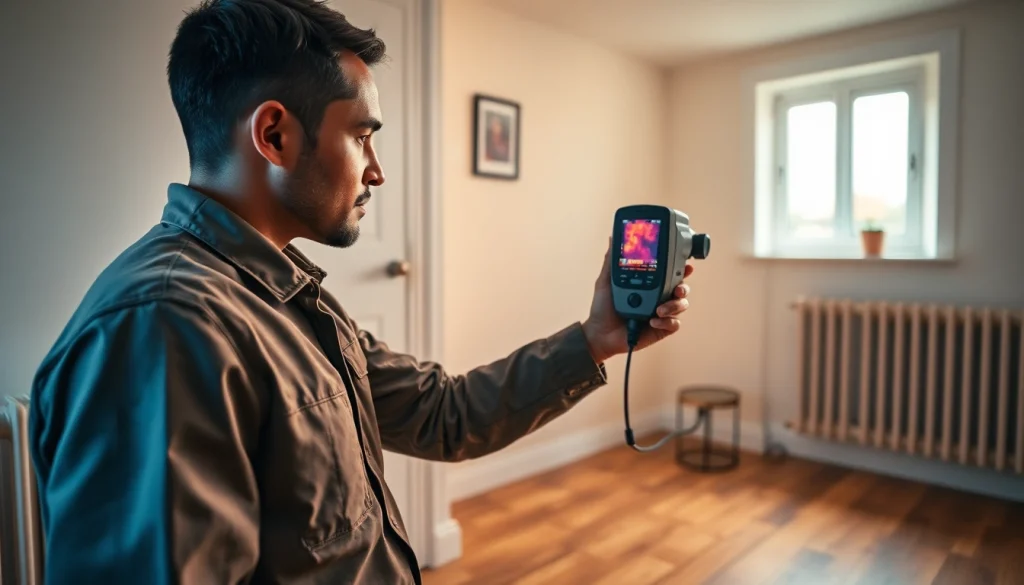
- Thermal Imaging Cameras: These devices use infrared technology to detect temperature discrepancies caused by leaking water.
- Acoustic Listening Devices: These tools can detect the sounds of escaping water through pipes, even when buried underground or hidden behind walls.
- Tracer Gas Detection: A safe, odorless gas is introduced into the pipework and traced to the point of escape, particularly useful for very small leaks.
- Moisture Mapping: This involves scanning areas to determine the extent of water damage and detect moisture behind walls or floors.
Comparing Non-Invasive Detection Techniques
Non-invasive techniques are preferred as they significantly reduce the need for disruptive repairs. Here are the benefits of various methods:
- Pressure Testing can confirm potential leaks without removing walls or flooring.
- Thermal Imaging is effective for visualizing leaks and assessing the severity of water intrusion.
- Acoustic Devices are particularly useful in noisy environments where other methods may fail.
- Tracer Gas is ideal for small leaks that are difficult to detect otherwise.
Using Thermal Imaging and Acoustic Devices Effectively
Thermal imaging cameras and acoustic devices can be used together for a comprehensive leak detection approach. By first using thermal imaging to locate areas of heat loss and then acoustic devices to pinpoint the exact leak location, technicians can provide a thorough assessment without invasive measures, saving both time and money.
Immediate Actions Upon Detecting a Hidden Leak
Once a hidden leak is suspected, urgent action is required to mitigate potential damage. Here are steps you should consider:
How to Assess the Severity of the Leak
Begin by determining the extent of water damage. Check for:
- Dampness in walls or ceilings.
- Visible rust or corrosion around pipes and fittings.
- Water pooling in lower areas, such as basements or utility rooms.
Steps to Take Before Professional Help Arrives
While waiting for professional assistance:
- Shut off the heating system to prevent further damage.
- Locate the main water supply valve and consider shutting it off if necessary.
- Remove any furniture or sensitive items from the affected area to minimize damage.
Avoiding Further Damage: What You Should Not Do
It’s essential to avoid certain actions that might exacerbate the problem:
- Do not attempt to repair the leak yourself unless you are suitably qualified.
- Avoid using sealants or adhesives that could obstruct the area for professional inspection.
- Do not ignore the symptoms, hoping they will resolve themselves.
Professional Leak Detection Services
When it comes to complex issues such as hidden leaks, seeking professional assistance is the best course of action. Here’s what to expect:
Why Hire a Leak Detection Specialist?
Professionals bring expertise and advanced technology to the process. They can quickly pinpoint the source of the leak, minimizing damage and repair costs. Their experience allows them to interpret data from various detection methods accurately.
What to Expect from a Professional Assessment
A professional leak detection service typically includes:
- A comprehensive analysis of the heating system.
- Use of state-of-the-art leak detection technology.
- A detailed report outlining findings, photographic evidence, and recommended repairs.
Cost Considerations for Leak Detection Services
The cost of professional leak detection services can vary based on several factors:
- The complexity of the heating system.
- The severity of the leak.
- The technology used for detection.
Preventative measures and regular maintenance can help reduce overall costs associated with leak detection and repairs.
Preventing Future Central Heating Hidden Leaks
Once a leak is detected and repaired, it’s essential to implement strategies to reduce the risk of future leaks.
Routine Maintenance Practices
Regular inspections and maintenance can help identify potential issues before they turn into significant problems. Homeowners should:
- Check for signs of wear and tear on pipes and fittings regularly.
- Ensure your boiler is serviced annually by a qualified technician.
- Maintain proper water pressure and temperature settings in your heating system.
Upgrading Your Heating System for Enhanced Reliability
Older heating systems are more prone to leaks. Upgrading to modern, energy-efficient models can significantly improve reliability and reduce the likelihood of hidden leaks.
Monitoring Systems: New Technologies to Consider in 2025
As technology advances, new monitoring systems are becoming available that can detect leaks more efficiently. These systems may include:
- Smart home integration, allowing for real-time monitoring and alerts.
- Automated pressure monitoring to detect drops indicative of hidden leaks.
- Moisture sensors that alert homeowners to water infiltration immediately.
By adopting these technologies and maintaining a proactive approach, homeowners can protect their properties from the costly consequences of central heating hidden leaks.